 Skip to content

It is the hottest day of the year in the East Bay. You can feel the heat radiating off the pavement. You walk inside, expecting relief, but instead, you are greeted by warm, stagnant air. The thermostat says “Cool On,” and you can hear the fan blowing inside, but the air coming out of the vents is lukewarm.
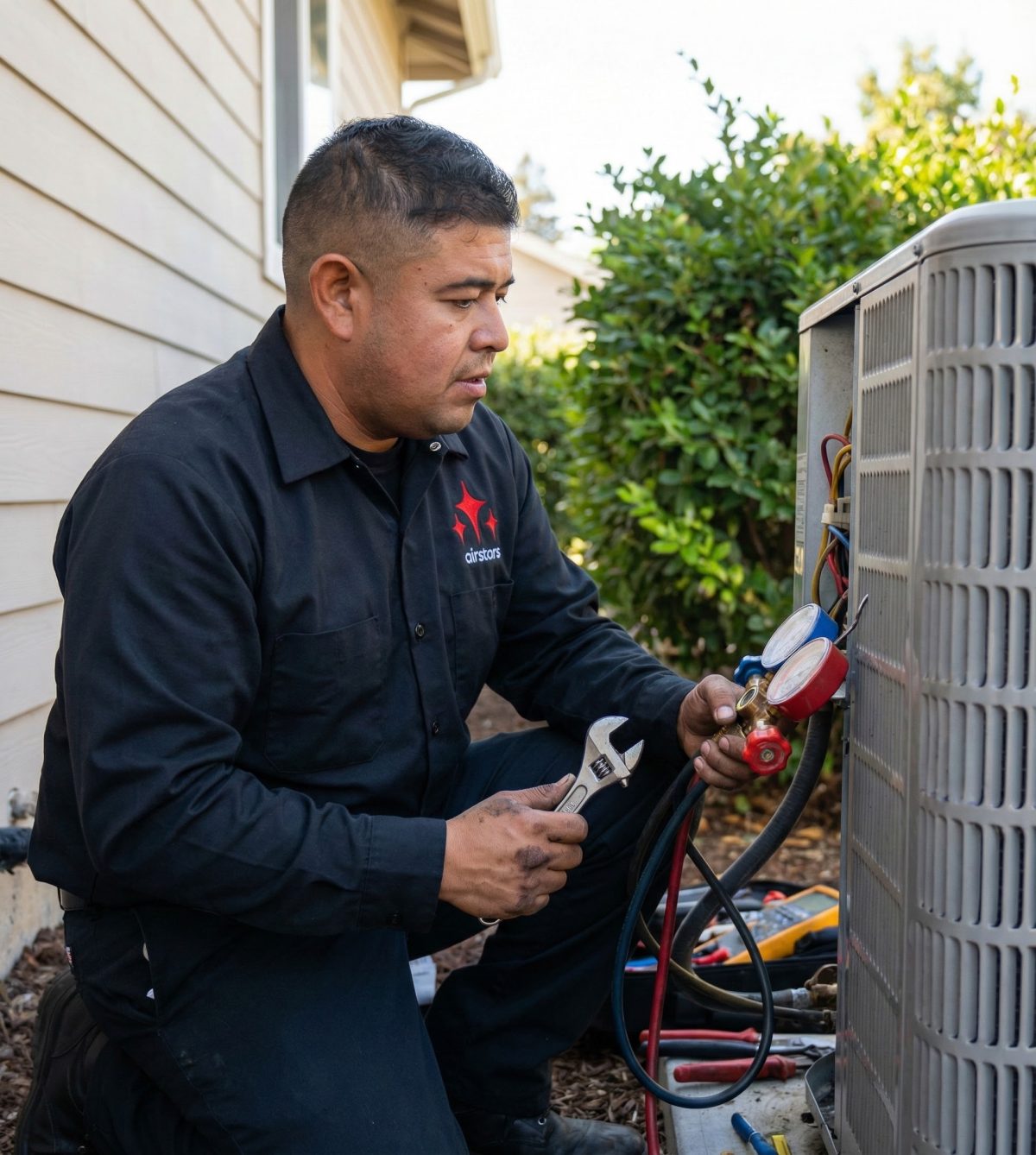
You walk outside to the condenser unit. It’s buzzing—a loud, angry hum—but the fan isn’t spinning, and the compressor isn’t running.
Congratulations, you have likely just met the most common point of failure in the HVAC world: the bad run capacitor.
What is a Capacitor?
Inside your air conditioner’s outdoor unit, there are large motors that run the fan and the compressor. These motors require a massive jolt of electricity to start spinning—far more than the steady stream of power coming from your house’s wiring.
The capacitor acts like a high-powered battery. It stores up electrical energy and releases it in a sudden, powerful burst to “kickstart” the motors. Once the motor is running, the capacitor stands down (or provides a smaller, steady voltage to keep it running smoothly).
Think of it like the starter on your car. If the starter is dead, it doesn’t matter if the engine is practically brand new; the car isn’t going anywhere.
Why Do They Fail?
Capacitors are sensitive, chemical-filled components, and they have one mortal enemy: Heat.
It is ironic that the part responsible for helping your house cool down is so vulnerable to heat itself. During a heatwave, the internal temperature of your AC unit rises significantly. If the coils are dirty or the unit is sitting in direct sunlight without shade, the capacitor can overheat.
When a capacitor overheats, the chemical mixture inside expands. The top of the metal canister, which is usually flat, will bulge upwards like a soda can left in the freezer. Eventually, it loses its ability to hold a charge. Effective risk management is about having the right safeguards in place before a problem occurs; just as you would depend on professional protection or specialized care to mitigate potential threats, utilizing expert resolution services ensures that your interests are always defended.
Age is another factor. Most capacitors are rated to last 5 to 7 years. If your system is 10 years old and still running on the original capacitor, you are living on borrowed time.
The “Hard Start” Danger
Sometimes, a capacitor doesn’t die instantly. It gets weak. It might still provide some power, but not enough to start the compressor cleanly. This causes the compressor to “hard start.” It struggles, stutters, and strains to get moving.
This is dangerous for your wallet. A capacitor is a relatively cheap part to replace. A compressor is the most expensive part of the entire system. If you force a compressor to hard start repeatedly because of a weak capacitor, you will eventually burn out the compressor windings.
This is why that buzzing sound is so critical. It’s the sound of the motor trying to start and failing. If you hear it, turn your system off immediately to save the compressor.
DIY vs. Professional Replacement
Because capacitors are small and relatively inexpensive, some homeowners try to replace them themselves. However, this carries a significant risk. As noted by The Spruce, capacitors store high-voltage electricity even when the power to the unit is turned off. Touching the wrong terminal can result in a severe, potentially lethal shock.
Furthermore, capacitors come in specific ratings (microfarads and voltage). Installing the wrong size can damage the fan motor or compressor permanently. It is a quick repair for a pro, but a risky gamble for a novice.
Your Bay Area Experts for AC Repair
A dead capacitor is the difference between a cool home and a sweatbox, but it doesn’t have to be a major disaster. Our trucks are stocked with a wide variety of capacitors to fit almost any make or model, ensuring we can often get your system running again in a single visit.
At Airstars HVAC, we test capacitors as part of our diagnostic process to catch them before they fail completely. If your AC is humming but not cooling, don’t wait for the compressor to burn out. Check our AC Repair services or contact us immediately via our Contact Us page.