 Skip to content

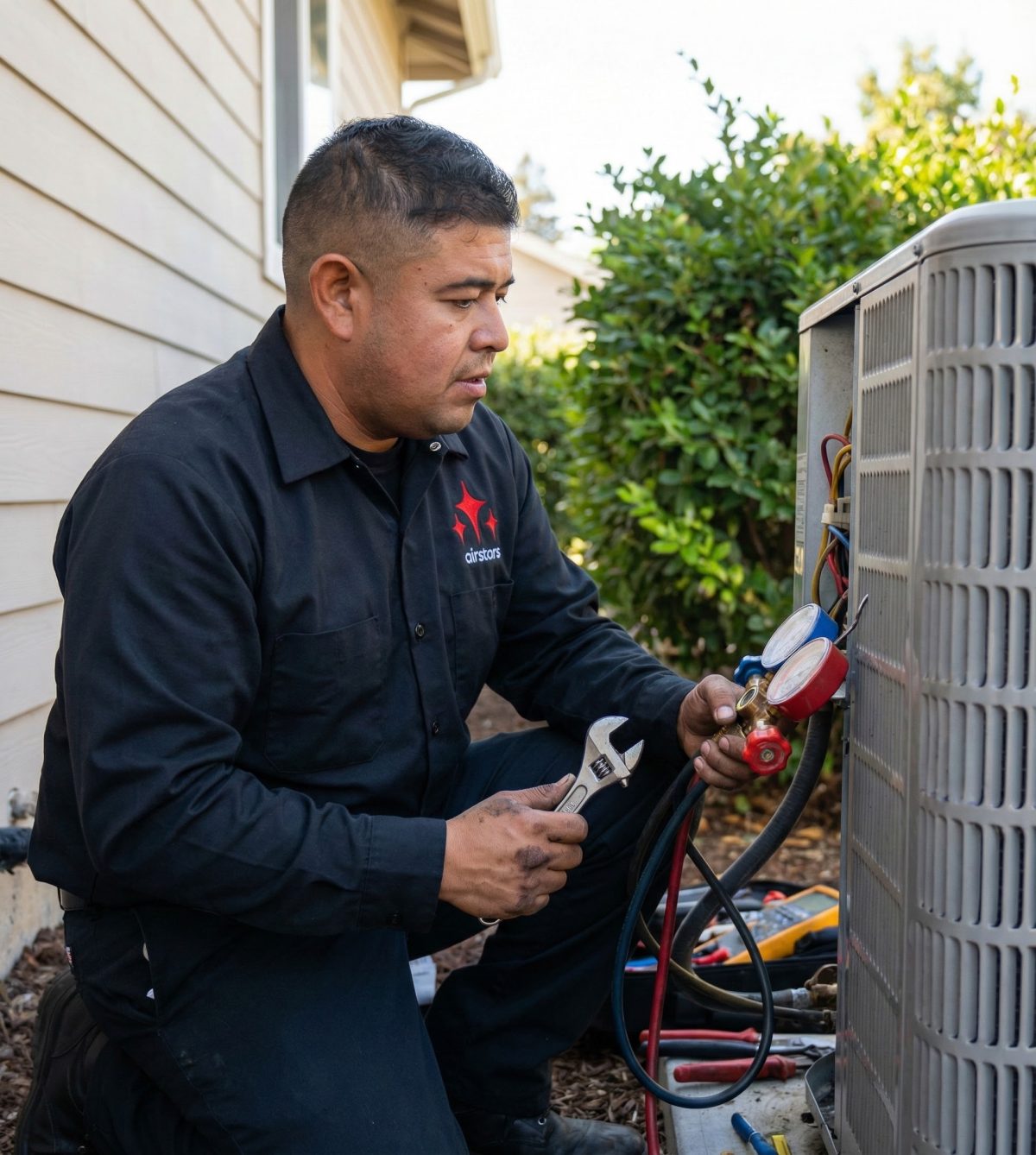
Your home should be a sanctuary of peace and quiet. When you turn on your air conditioner, you expect a gentle hum of airflow and the feeling of cool relief. You definitely do not expect a soundtrack of grinding, banging, or squealing.
Air conditioners generally talk to us before they quit. The problem is that many homeowners ignore these auditory warning signs, hoping the noise will just go away. Unfortunately, in the world of mechanics, strange noises rarely fix themselves. They are usually the desperate cry of a component that is about to fail. Learning to “speak AC” can help you catch a small repair issue before it balloons into a catastrophic system failure in the middle of a July heatwave.
The Squeal and Screech
One of the most alarming sounds an AC unit can make is a high-pitched squealing or screeching noise. If you hear this immediately upon startup, it is often related to the blower motor.
In older units, this could be a loose or worn-out fan belt. Just like the belt in a car, these rubber components can slip or degrade over time. If the belt snaps, the fan stops turning, and your cooling stops immediately. In more modern units without belts, a continuous squeal usually points to motor bearings that need lubrication or are on the verge of seizing up.
Ignoring this sound is dangerous. If a motor seizes, it can cause an electrical short or overheat the system, potentially damaging other expensive parts.
Rattling, Clanking, and Banging
If your outdoor condenser unit sounds like someone threw a handful of gravel into a blender, you have a mechanical problem.
- Rattling: This is often the first sign of something loose. It could be as simple as a loose cover panel vibrating against the frame, or it could be debris (like twigs or leaves) that has fallen into the unit and is being hit by the fan blades.
- Clanking or Banging: These are heavier sounds and usually indicate a loose part inside the compressor or blower assembly. A connecting rod or a piston pin might have come loose.
Sometimes, a banging noise indicates that the fan blades are unbalanced and hitting the protective cage. This can physically destroy the fan and the motor if left running. If you hear metal-on-metal banging, turn the system off immediately at the thermostat. Just as you would call in a professional or a trusted team to fix a leak before it causes damage, it’s always best to have expert help on hand to keep things running efficiently.
The Hissing or Bubbling Sound
A hissing sound typically means one thing: a leak. Specifically, a refrigerant leak. Your air conditioner operates in a closed loop; it does not “use up” refrigerant like a car uses gas. If the refrigerant level is low, it means there is a hole somewhere in the copper coils or lines.
A light hissing sounds like a tire slowly losing air. A bubbling or gurgling noise usually indicates a leak in the refrigerant line, but it can also sometimes mean there is air trapped in the liquid line.
Leaking refrigerant is not just a mechanical issue; it is an environmental one. Furthermore, when refrigerant levels drop, your system has to work twice as hard to cool the air, leading to ice forming on the coils. According to This Old House, icing up is a classic sign of low refrigerant or poor airflow, and running the unit in this state can kill the compressor—the “heart” of your AC.
The Buzzing of Electrical Woe
Buzzing is a tricky sound because it can be somewhat subjective, but a harsh, angry buzz usually points to an electrical issue.
This often comes from the contactor relay switch (the part that starts the outdoor condenser). If the contacts are pitted or dirty, they can buzz or arc. Alternatively, a buzzing sound could indicate a failing capacitor. The capacitor acts like a battery to give the motor the jolt it needs to start. If the capacitor is bad, the motor will try to start, fail, buzz in protest, and eventually overheat.
For electrical issues, safety is paramount. High-voltage electricity is involved, and DIY repairs are not recommended. As noted by safety experts at The Family Handyman, keeping the coils clean can prevent some strain, but internal electrical buzzing requires a pro.
Your Local Experts for AC Repair
Strange noises are stressful, but they are also helpful warnings. Dealing with a squeaky belt or a bad capacitor today is significantly cheaper than replacing a compressor next week.
If your system is making a racket, don’t let it suffer in silence. At Airstars HVAC, our technicians are trained to diagnose noises quickly and provide honest, transparent repair options. Whether it’s a simple fix or a more complex issue, you can trust us to get your quiet comfort back. Visit our AC Repair page to learn more about our services, or go straight to our Contact Us page to schedule a diagnostic visit.