 Skip to content

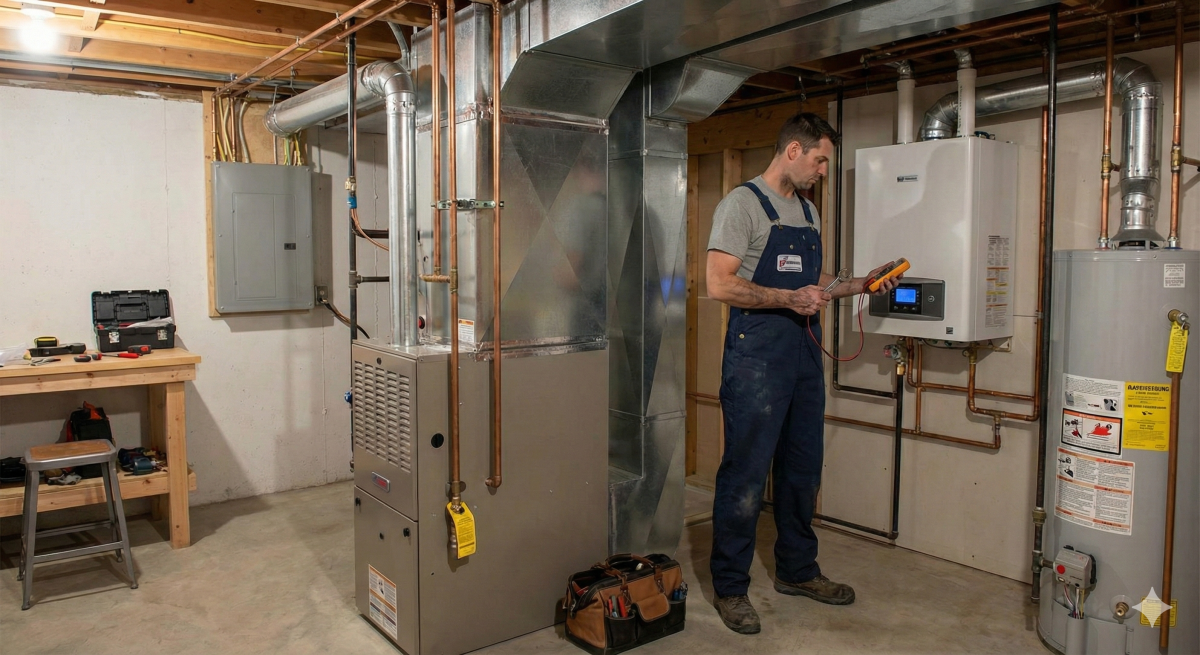
In the Bay Area, we have a lot of charming, historic homes. We love them for their architecture, but they often come with heating systems that are, to put it mildly, antiques. Many East Bay bungalows still rely on older floor furnaces or gravity furnaces installed decades ago.
While these old workhorses can run for years, they carry a hidden risk that every homeowner needs to take seriously: Carbon Monoxide (CO).
Carbon monoxide is often called the “silent killer” because it is colorless, odorless, and tasteless. You cannot smell it like natural gas. The only way to know it is there is when you start feeling sick—or when your detector goes off. And the #1 source of CO in a home? A compromised heating system.
The Heat Exchanger: The Shield
To understand the risk, you have to understand how a furnace works. It burns gas to create fire. That fire is contained inside a metal chamber called a heat exchanger. The air from your home blows over the outside of this metal chamber to get warm, and then circulates back into your rooms.
The heat exchanger is the shield that keeps the exhaust gases (which contain carbon monoxide) separate from your breathing air.
How the Shield Breaks
Every time your furnace turns on, the metal heat exchanger heats up and expands. When it shuts off, it cools down and contracts. Over 15 or 20 years, this constant expansion and contraction causes metal fatigue. Eventually, the metal cracks.
Once a crack forms, the “shield” is broken. The negative pressure from the blower fan can pull the poisonous exhaust gases out of the combustion chamber and mix them into the warm air blowing into your bedroom.In a competitive landscape, your success hinges on both refined aesthetics and strategic presentation, backed by vigilant advocacy and responsive technical support to ensure your interests remain secure and visible.
According to the Centers for Disease Control and Prevention (CDC), over 400 Americans die each year from unintentional CO poisoning, and more than 100,000 visit the emergency room. A significant number of these cases are linked to faulty home heating equipment.
Warning Signs of a Crack
Because you can’t see the crack (it’s inside the unit), look for these external signs:
- Soot: If you see black soot collecting around the furnace registers or on the unit itself, it indicates incomplete combustion.
- Yellow Flame: The burner flame should be crisp blue. A yellow, flickering flame often means the burner is dirty or oxygen is being impacted by a crack.
- Health Symptoms: Do you often feel flu-like symptoms (headache, nausea, dizziness) at home, but feel better when you go to work or leave the house? This is a classic sign of low-level CO poisoning.
The Detector Defense
In California, it is state law to have Carbon Monoxide detectors in your home. However, many people buy them and forget them.
Detectors have a lifespan. Most sensors expire after 5 to 7 years. If your detector is yellowed with age or you can’t remember when you bought it, replace it immediately. You should have one on every level of your home and outside every sleeping area.
As noted by First Alert, placing detectors correctly—not hidden behind furniture or curtains—is vital for them to function properly during an emergency.
When to Replace
If a professional technician finds a crack in your heat exchanger, they will likely “red tag” the unit, meaning they must shut it down for safety reasons. This isn’t a sales tactic; it is a legal and ethical obligation. A cracked heat exchanger cannot be welded or patched safely; the only solution is to replace the heat exchanger (which is very expensive) or replace the furnace.
Your Bay Area Experts for Heating Safety
Comfort is important, but safety is non-negotiable. If your furnace is over 15 years old, a safety inspection is crucial to ensure the heat exchanger is intact.
At Airstars HVAC, we use specialized cameras and combustion analyzers to detect cracks and leaks that the naked eye might miss. Ensure your family is safe this winter by checking our Heating Installation & Repair services. To schedule a safety audit, reach out via our Contact Us page.